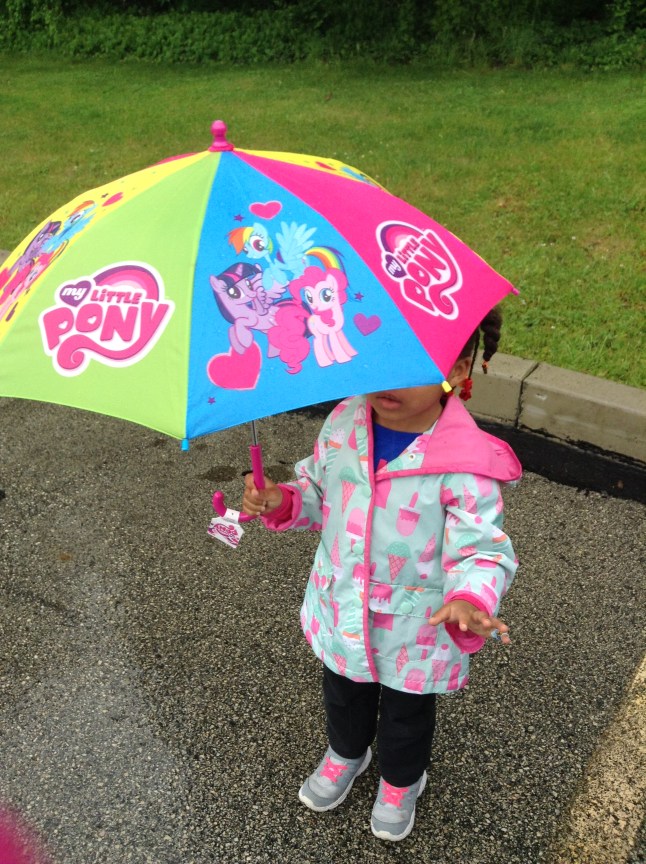
 “Rain, rain, go away! Come again another day!” is a song most children and adults are familiar with because rain disrupts outdoor plans and even has the ability to put people in a dreary mood. Nevertheless, there’s some fun that comes with rain. When I was a little girl, I loved putting on my galoshes and rain coat and splashing in puddles. Though it may not be safe, I was guilty of trying to catch raindrops with my tongue too. Of course, my daughter loves the sunshine, but she’s excited about rainy days so that she can splash in puddles, dance around and sing. She could barely contain herself when she got to wear her new galoshes and rain coat for the first time asking to show her big cousin her rain outfit.
Since we’ve been experiencing quite a bit of rain, yesterday, I purchased a My Little Pony umbrella that she picked out all by herself. Quinn asked if she could open it in the store and even in the car. As soon as we arrived home, she insisted, “Mommy, I need to open my umbrella now to make sure it works for the rain, please!” I obliged of course, and then she begged, “Mommy, I have to use my umbrella when we go to the train station to meet Daddy. Please, Mommy!” She excitedly awaited her daddy’s arrival with her umbrella in hand and the tag still attached to the handle. “Look at my new umbrella, Daddy! I’m using it in the rain and waiting for you,” my three year old said.
I just imagined, what if we adults were that excited to put on our galoshes, rain coats and use our umbrellas. What would we do without looking on the bright side and having fun even on rainy days?
All the best,
Tanya


 According to


 Quinn is not in school and spends most of her time with her father and me. Even though we play games with her, do different activities and have a great time, deep down I know that she longs for more friends who are children. I posted a blog entry a few months ago about how she sets up all of